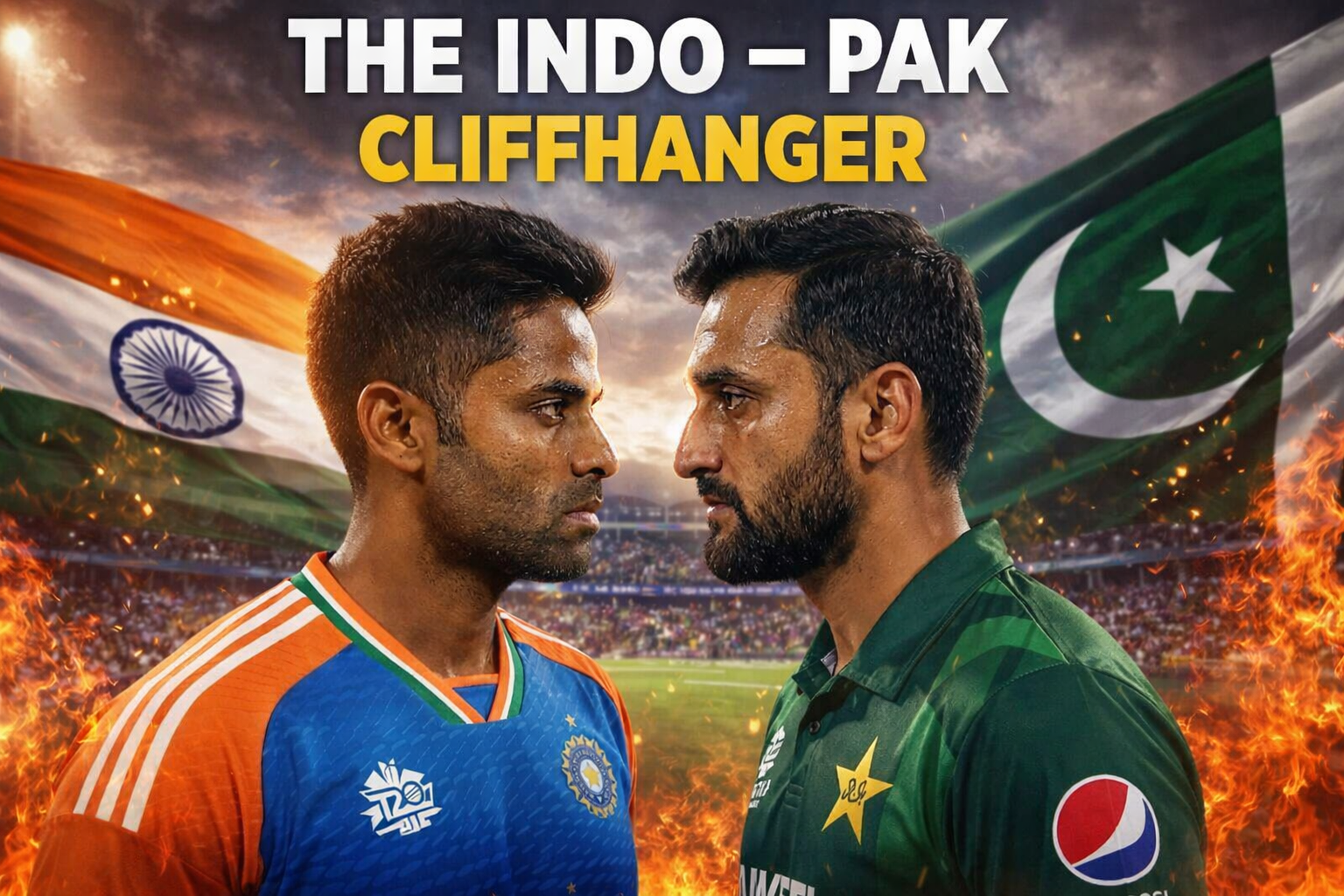
Colombo: Cricket’s most electrifying rivalry returns to center stage as India and Pakistan face off in a blockbuster Group A encounter of the ICC Men’s T20 World Cup 2026 at the iconic R. Premadasa Stadium. Scheduled for February 15, this clash is more than just a group-stage fixture — it is a battle of pride, history, and momentum in one of sport’s most emotionally charged contests.
With both teams entering the match unbeaten and brimming with confidence, the stakes could not be higher. Group A, featuring emerging sides such as the USA, Namibia, and the Netherlands, has already seen strong performances from the subcontinental giants. A win here not only strengthens qualification hopes for the Super 8s but also provides psychological advantage heading into the business end of the tournament.
The Venue: Spin, Strategy, and Subtle Surprises
The R. Premadasa Stadium in Colombo is renowned for its unique T20 character. Unlike flat batting paradises seen elsewhere, this surface often demands adaptability. Traditionally spin-friendly, the pitch tends to grip during the middle overs, rewarding wrist-spinners and bowlers who vary their pace cleverly. Scores between 150 and 170 have frequently proven competitive here, especially when teams apply scoreboard pressure.
Humidity and dew add another layer of intrigue. Evening matches often witness significant moisture settling on the outfield, making the ball slippery and aiding the chasing side. Pakistan captain Salman Ali Agha’s decision to bowl first reflects tactical clarity — exploit early assistance with the new ball and back their batters to chase under lights.
Weather forecasts suggest warm conditions hovering around 30°C with high humidity. While scattered thunderstorms remain a possibility, the expectation is for a full contest, perhaps with brief interruptions adding drama rather than derailing the spectacle.
India’s Approach: Spin Power and Batting Depth
India, led by the dynamic Suryakumar Yadav, have embraced the Colombo conditions with calculated changes. The return of explosive opener Abhishek Sharma injects left-handed aggression at the top, complementing the fearless Ishan Kishan. Their mandate is clear: maximize the powerplay before the pitch slows down.
India’s likely XI reflects balance and adaptability:
Abhishek Sharma, Ishan Kishan (wk), Tilak Varma, Suryakumar Yadav (c), Hardik Pandya, Shivam Dube, Rinku Singh, Axar Patel, Kuldeep Yadav, Varun Chakravarthy, Jasprit Bumrah.
The inclusion of Kuldeep Yadav in place of a pacer signals India’s trust in wrist-spin. Alongside Varun Chakravarthy’s mystery variations and Axar Patel’s control, India possess a formidable spin trio capable of dictating the middle overs.
Suryakumar Yadav remains the centerpiece. His 360-degree stroke play allows India to counter both pace and spin. Hardik Pandya’s finishing prowess, coupled with Rinku Singh’s composure in tight chases, ensures India bat deep. Shivam Dube adds muscle against spin — a crucial asset on this surface.
At the back end, Jasprit Bumrah remains India’s trump card. His ability to deliver pinpoint yorkers under pressure makes him arguably the world’s premier T20 death bowler. If defending a target, Bumrah could prove decisive in the final overs.
Pakistan’s Blueprint: Pace Threat and Anchored Stability
Pakistan enter the contest unchanged, reflecting confidence in their core combination. The likely XI includes Saim Ayub, Babar Azam, Salman Ali Agha (c), Usman Khan, Shadab Khan, and spearhead Shaheen Shah Afridi, among others.
Shaheen Afridi’s battle with India’s openers could define the match. His ability to swing the new ball at pace poses an immediate threat. Early breakthroughs against Abhishek or Ishan would tilt momentum sharply.
Babar Azam remains Pakistan’s batting anchor. His classical technique and calm temperament allow others to play around him. In pressure games, Babar’s role is not merely about runs — it’s about tempo control. If he bats deep, Pakistan’s chase or recovery effort gains structure.
Shadab Khan and Abrar Ahmed bring spin variety, perfectly suited for Colombo. Pakistan’s strength lies in adaptability — blending disciplined bowling with bursts of aggressive batting from their middle order.
Captain Salman Ali Agha shoulders dual responsibility — tactical leadership and all-round contributions. His performance under pressure will influence Pakistan’s balance.
Head-to-Head History: Drama Written in Every Chapter
India and Pakistan have shared unforgettable T20 World Cup moments. From India’s triumph in the inaugural 2007 edition to Pakistan’s statement victories in later tournaments, each meeting has added a new chapter to cricket folklore.
Encounters in Colombo carry special resonance. India’s 2012 World Cup win at this very venue demonstrated their ability to handle spin-heavy conditions. Yet Pakistan’s knack for rising in big tournaments ensures no advantage is permanent.

Recent bilateral cricket between the two nations has been limited, heightening anticipation for global tournament clashes. Every meeting becomes an event — emotionally charged, fiercely competitive, and watched by millions worldwide.
Tactical Battles to Watch
1. Powerplay Showdown:
Shaheen Afridi vs India’s openers. If India survive the first six overs with minimal damage, they gain leverage. Early wickets, however, could expose India’s middle order sooner than desired.
2. Spin Chess Match:
Kuldeep and Chakravarthy against Babar and Pakistan’s middle order. Containment and breakthroughs in overs 7–15 will determine scoring tempo.
3. Death Overs Duel:
Bumrah vs Pakistan’s finishers. Conversely, how India counter Pakistan’s death specialists will shape the final total.
4. Dew Factor:
If dew settles heavily, defending becomes challenging. Pakistan’s decision to chase reflects confidence in exploiting this factor.
Momentum and Mentality
Both teams carry strong form into this clash. India’s recent group performances have been clinical, combining aggressive batting with disciplined bowling. Pakistan’s resilience has shone in pressure situations, particularly during tense chases.
However, form often dissolves under rivalry pressure. Emotional intensity, crowd energy, and microscopic scrutiny can alter even the best-laid plans. The side that manages nerves better will likely seize the initiative.
What Could Decide the Game?
-
A blistering 40-run powerplay from India.
-
A Shaheen Afridi double strike inside three overs.
-
A Suryakumar masterclass in the middle overs.
-
A Babar Azam anchor knock under lights.
-
Or a final-over finish engineered by Bumrah or Pakistan’s death hitters.
Margins in India-Pakistan contests are famously slim. A dropped catch, a missed run-out, or a single over of brilliance can flip the narrative.
Prediction
If India post a total above 160, their spin arsenal combined with Bumrah’s finishing expertise could tilt the balance. Yet Pakistan chasing under dew, anchored by Babar and powered by Afridi’s breakthroughs, makes them equally formidable.
Expect tension, tactical nuance, and potentially a last-over climax. In tournaments past, such encounters have transcended sport — and this edition promises no less.
When India and Pakistan collide, statistics fade and stories are born. Colombo braces for another unforgettable chapter in cricket’s greatest rivalry.